
AI Voice & Audio
What Is Dessa AI Voice Model? Block's Speech AI Explained
Understand Block's Dessa AI voice model, speech-only learning, full-duplex conversation, access status, and how it differs from the older RealTalk project.
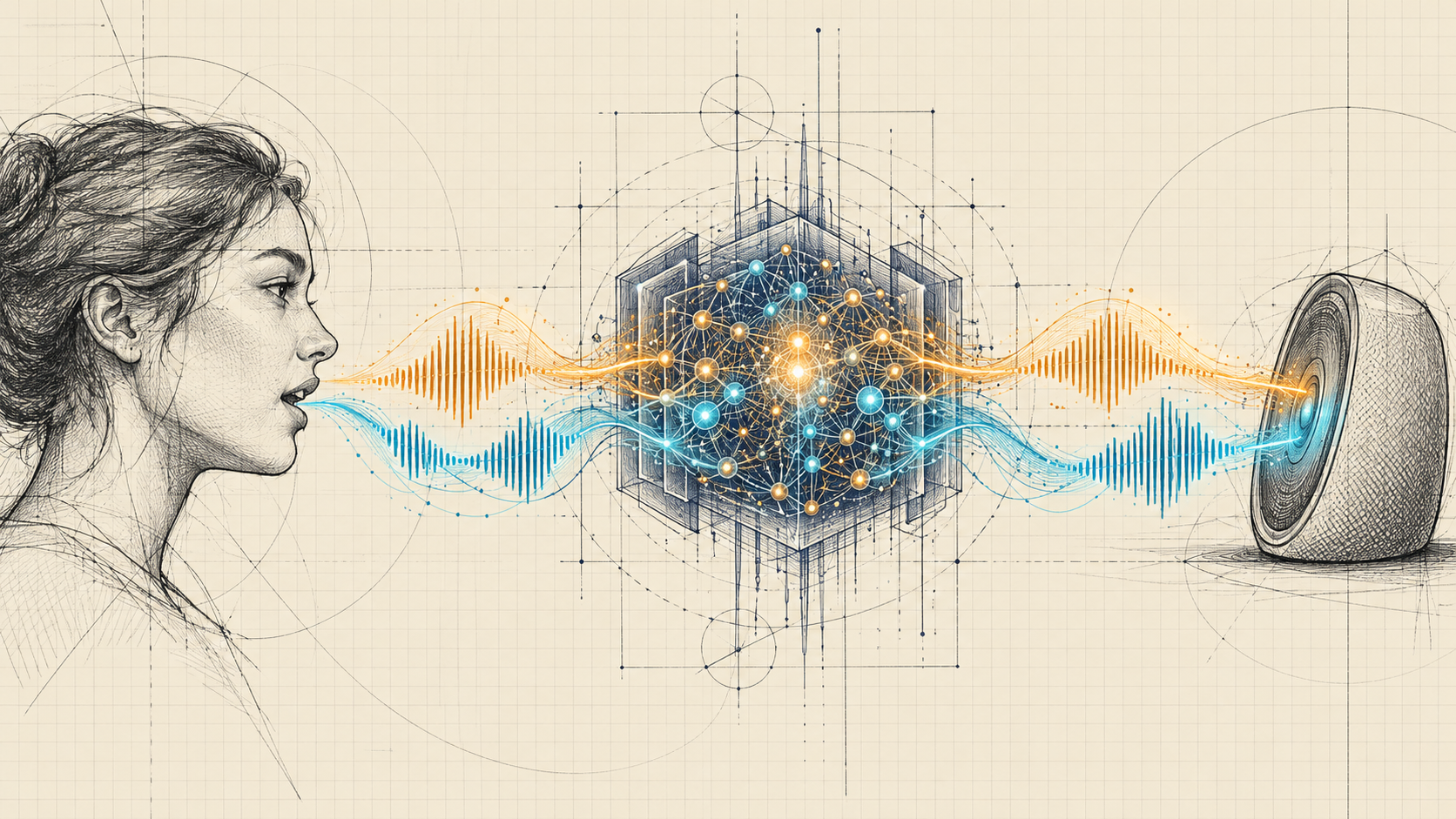
Dessa is a conversational voice AI model from Block. Block describes it as trained from human speech alone, without text or pretrained models, and able to listen and speak simultaneously. That makes it a speech-to-speech research model, distinct from a script-reading voice generator. Block's official Dessa page
For anyone searching “what is Dessa AI voice model?”, the practical question is what this approach changes—and what you can actually use. A compelling conversation recording, a downloadable model, and a documented production API are different deliverables.
Verification date: October 26, 2026. This guide separates the release page's claims from our engineering analysis. We reviewed public documentation and site availability; we did not independently benchmark Dessa. The illustrations are conceptual sketches, not disclosures of its internal architecture.
Table of contents
- Dessa at a glance
- What speech-to-speech means
- Why full-duplex conversation matters
- Dessa versus RealTalk
- What the demonstrations can establish
- Access, downloads, API, and pricing
- Understanding the hardware claims
- Where this approach could help
- A practical voice AI evaluation checklist
- Planning an integration with 01Router
- Frequently asked questions
- Sources and verification notes
- Start creating audio with 01Router
Dessa at a glance
| Question | What the official page establishes at this review |
|---|---|
| Who built it? | A research lab inside Block. |
| What is the interface? | Audio input and audio output, with full-duplex conversation. |
| How does Block describe training? | Human conversation audio, trained from scratch. |
| What can the public inspect? | Demonstration recordings and the project explanation. |
| Is general access confirmed? | The page says launch links are coming soon; limited safety-research access is described. |
Source: Block's project page, checked October 26, 2026. These are developer statements and an observed access state, not independent performance findings.
The distinction matters when you plan a product. Research interest can justify an experiment, but a launch dependency needs an accessible service, a usable license, and a supportable operating model. Keep those decisions separate even when the demonstration is impressive.
What speech-to-speech means
A common voice assistant design connects several stages: speech recognition converts audio to text, a language model generates a written response, and text-to-speech turns that response into sound. This arrangement makes each stage inspectable and replaceable. It also creates decisions about when to stop listening, when a transcript is final, and when playback should begin.
Speech-to-speech systems instead make spoken interaction central to the model interface. The idea is broader than giving an ordinary chatbot a pleasant voice. Incoming sound contains timing, emphasis, hesitation, and overlap; a transcript alone does not preserve all of those signals.
For example, imagine a user saying, “I can do Thursday,” then immediately correcting themselves: “Actually, Friday.” A useful assistant needs to incorporate the correction while managing its own response. Producing beautiful audio for the wrong day is still a failed interaction.
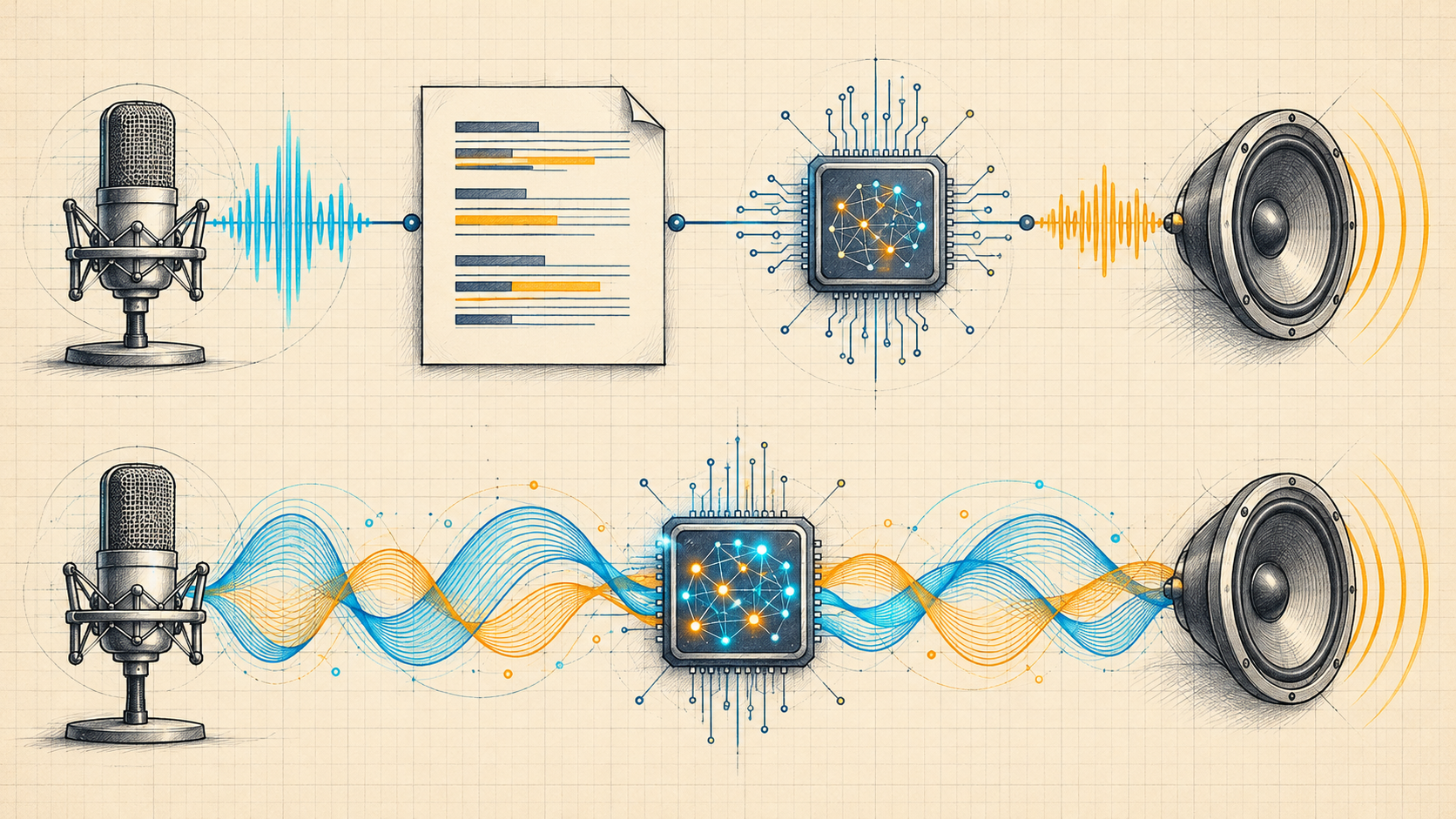
Conceptual comparison: a transcript can be a useful intermediate representation, but conversation also carries information in sound and timing.
There is precedent for researching this interface. The Moshi paper describes a full-duplex speech-text model with parallel streams for the user and model. It also uses a text-model backbone. That example helps separate two ideas: full-duplex behavior and speech-only training are different design choices. One does not automatically imply the other.
Do not infer Dessa's parameter count, audio codec, layer structure, or context length from the label “speech-to-speech.” Those require explicit technical documentation. Likewise, an explanatory diagram should not be treated as a reverse-engineered model specification.
Why full-duplex conversation matters
Full duplex means both sides can transmit at the same time. In a voice application, the useful question is whether the assistant can continue attending to the user while it speaks—and react appropriately when the conversation changes.
Three behaviors are worth distinguishing:
- Interruption: The user stops or redirects an answer that is already playing.
- Backchanneling: A brief acknowledgment signals listening without taking over the conversation.
- Turn management: The system decides whether a pause means “your turn” or “I am still thinking.”
These are interaction requirements, not just voice-quality requirements. A fluent assistant that speaks over every hesitation can be harder to use than a less expressive assistant that gives people space.
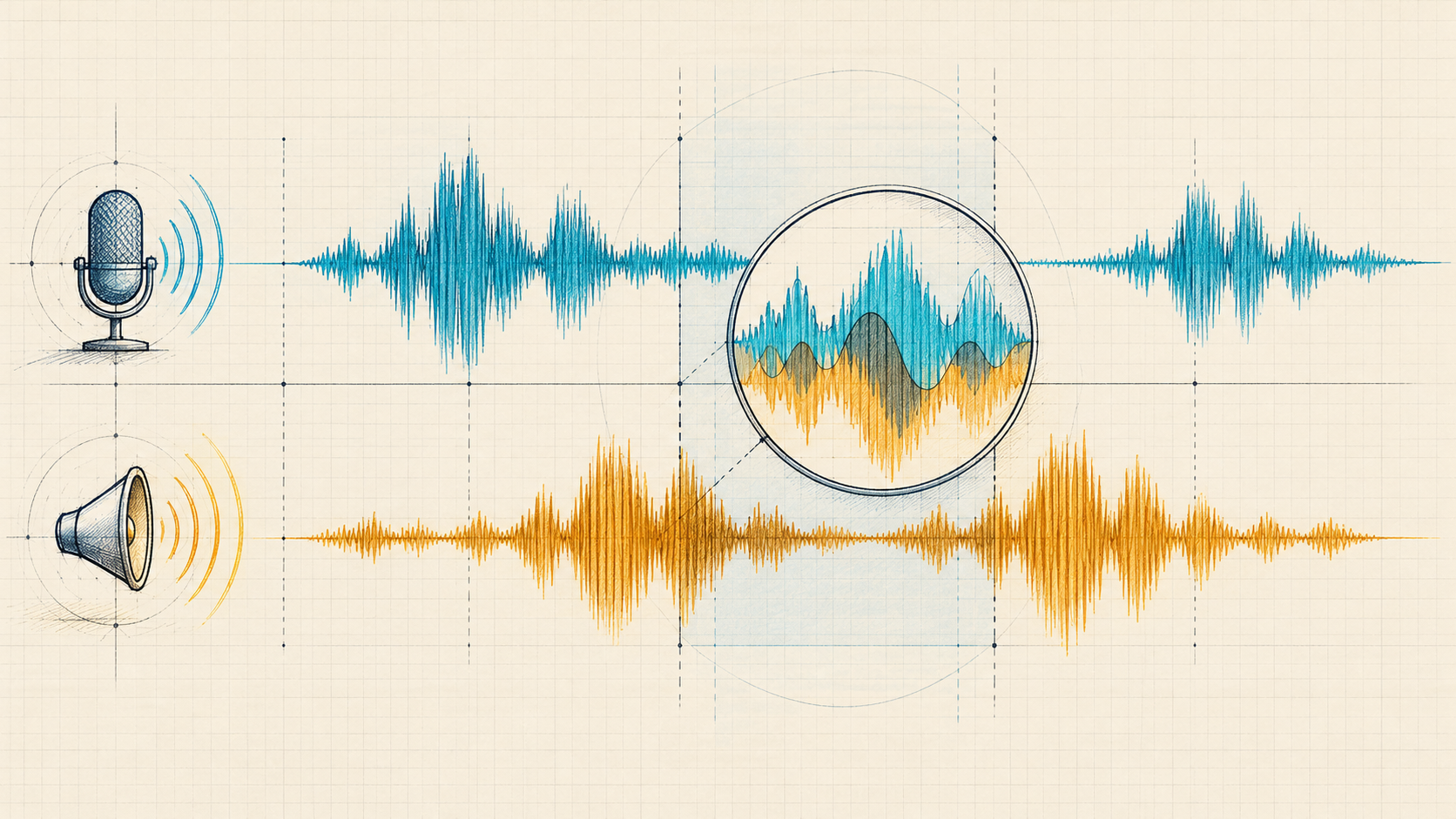
Overlapping timelines illustrate the interaction pattern; they are not measured Dessa latency results.
Consider a language-learning exercise. A learner may pause to recall a word, start again, or ask for help mid-sentence. The desired response changes with the situation. An immediate completion could help a confident speaker but interrupt someone practicing recall. Good evaluation therefore tests timing against user intent, not simply whether the model produces sound quickly.
Full duplex also does not remove the need for product controls. Users still need a clear mute action, an obvious end-session button, and a way to recover when speech is misunderstood.
Dessa versus RealTalk
The name has history. In May 2019, the earlier Dessa team published RealTalk, a text-to-speech demonstration reproducing Joe Rogan's voice. Its announcement said the generated audio came from text input and that the research, model, and datasets would not be publicly released at that time. Dessa's original RealTalk announcement
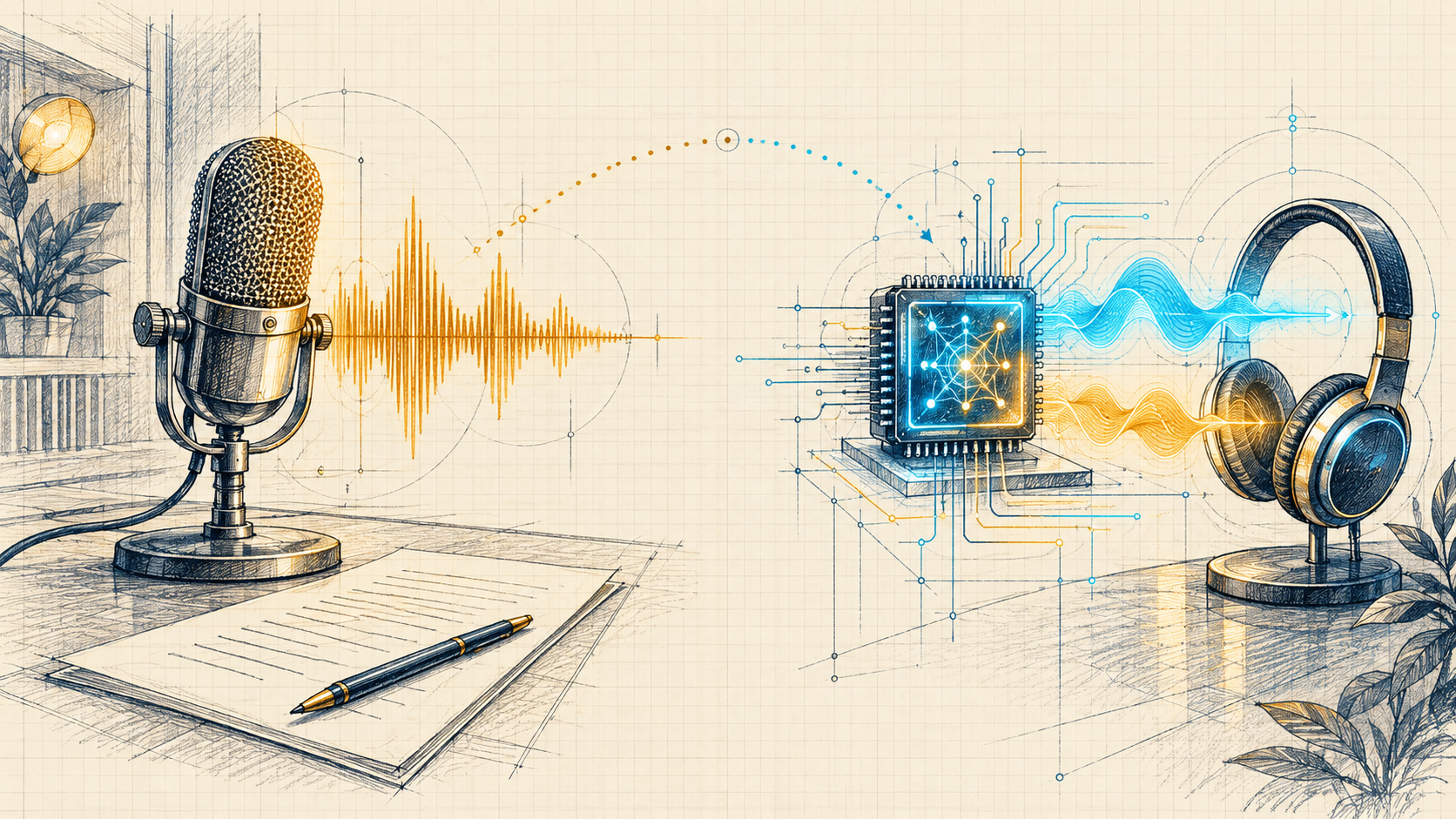
A shared research history should not be confused with an identical model, interface, or release.
When reading a search result, check its date and task definition. Does it describe generating a recording from a script, or holding an interactive spoken conversation? Does the download link belong to the model developer? Is the article discussing a historical experiment or a current product?
Those questions prevent a common category error: assuming that any page mentioning Dessa and a familiar voice is documentation for today's model. They also prevent importing old limitations—or old promises—into a new system without evidence.
What the demonstrations can establish
Treat a demo as a set of examples. It can suggest what to test, but it cannot establish how reliably a system behaves across unfamiliar users and conditions. A useful review records both an observation and the unanswered question it creates.
| Example to inspect | Follow-up test before relying on it |
|---|---|
| A well-timed acknowledgment | Does it remain appropriate during serious or sensitive conversation? |
| A smooth interruption | Can the user cancel playback consistently under background noise? |
| An expressive response | Can delivery change without changing the intended meaning? |
| A plausible factual answer | Is it correct, and does the model admit uncertainty when necessary? |
| A natural short exchange | Does the behavior hold through a longer session and repeated corrections? |
Keep naturalness, accuracy, and task completion as separate scores. A warm tone can make an incorrect answer feel convincing. Conversely, a slightly mechanical answer may still complete a narrow workflow correctly.
Avoid declaring a winner from unmatched recordings. Fair comparison requires equivalent prompts, microphones, network conditions, stopping rules, and scoring criteria. If those details are missing, describe the samples rather than inventing a benchmark ranking.
Access, downloads, API, and pricing
The access snapshot above is the starting point for verification. Before paying for, downloading, or integrating anything carrying the Dessa name, follow links from the developer's own domain and inspect what is actually available.
For a usable integration, look for these concrete artifacts:
- An official access route: A working application, release repository, or documented service endpoint.
- An identifiable model: A model ID or version that can be pinned for reproducible tests.
- A usage agreement: Terms covering the intended application and distribution model.
- An operating contract: Supported audio formats, session limits, errors, and authentication.
- A commercial explanation: A billing unit and a clear definition of what incurs a charge.
An email-interest form does not establish an API contract. A download button without a working release does not establish access to weights. A third-party tool using a similar name does not establish affiliation.
Keep a dated record of the link you checked. Access states can change more quickly than search snippets. If you cannot verify a required capability, mark it “unconfirmed” in your project plan rather than filling the gap with assumptions.
Understanding the hardware claims
Block reports local operation on an M4 Max MacBook Pro or better, faster-than-real-time inference, and training on one GB200 NVL72 system. These are reported claims, not measurements from our testing. Block's hardware statements
The word one needs context. NVIDIA describes GB200 NVL72 as a rack-scale configuration containing 72 Blackwell GPUs and 36 Grace CPUs. It is not one consumer graphics card. NVIDIA GB200 NVL72 specifications
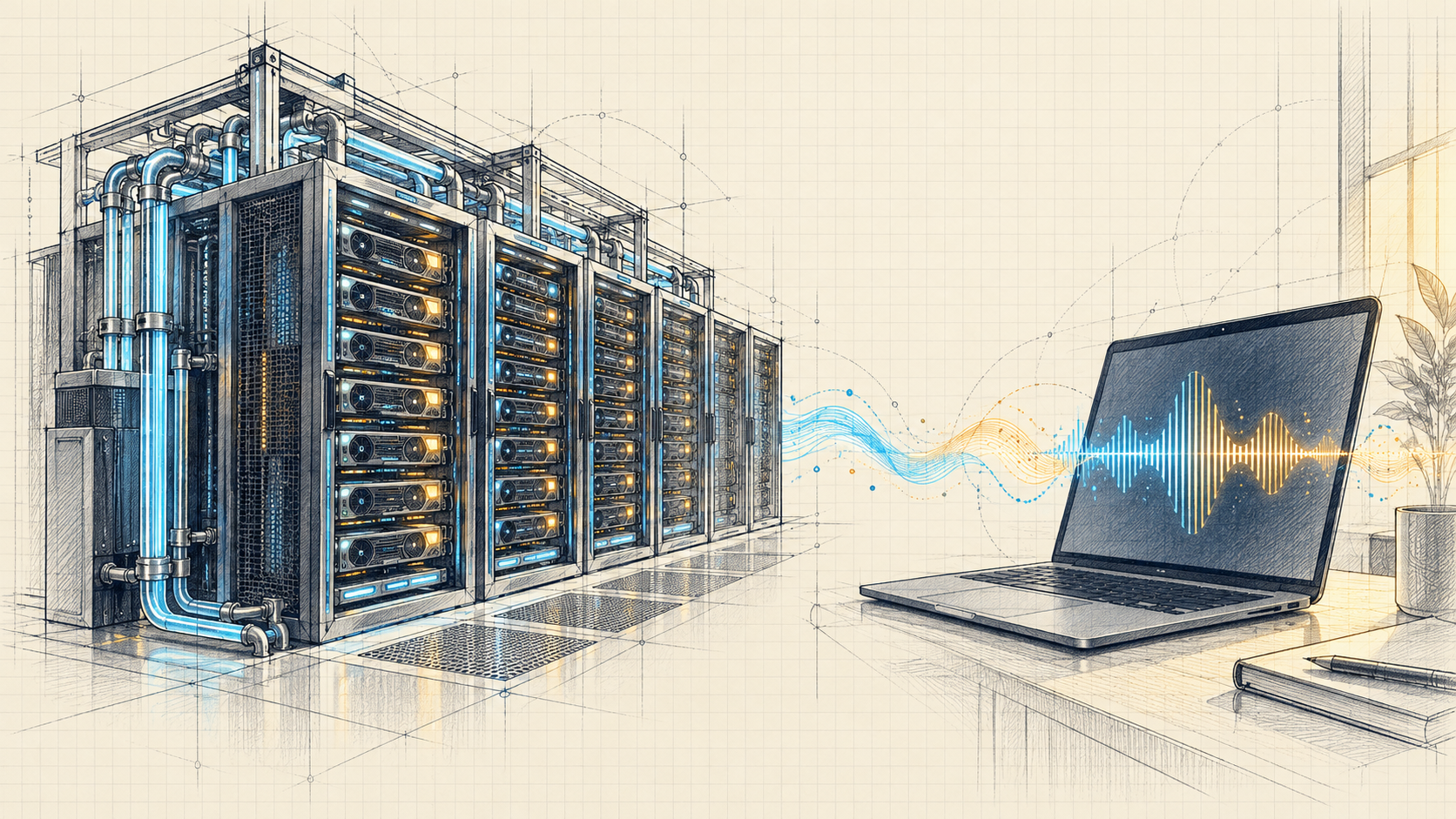
Training infrastructure and inference hardware answer different deployment questions.
For planning, ask about memory, model precision, sustained session duration, and simultaneous users. A chip family alone does not specify a complete supported configuration. A laptop demonstration also does not determine the capacity or cost of a hosted service.
Speed deserves similar care. Processing audio faster than its duration does not by itself tell you how long a user waits for a reply. Perceived delay can include input buffering, a decision about when to respond, generation, transport, and playback buffering. Measure the whole interaction on the hardware and connection your users will actually have.
Where this approach could help
The following are potential evaluation scenarios, not a list of verified Dessa product features.
Conversational practice benefits from testing corrections, hesitation, and patient turn-taking. Success could mean a learner finishes their thought and receives an appropriate response—not that the assistant speaks for the largest share of the session.
Hands-free interfaces need short, interruptible replies. A user cooking or working with tools may need to stop an explanation without touching a screen. The product should retain essential visual or physical controls for situations where speech fails.
Guided support needs accurate outcomes and a clear handoff. A pleasant conversation is not enough if an assistant misunderstands a reference number or loses track of the user's request. Test confirmation and correction explicitly.
Creative prototyping can explore delivery and conversational rhythm before committing to a specific workflow. Keep permissions for voices and recordings documented, and label generated material clearly for the people who encounter it.
Choose a scenario with observable success criteria. “Feels human” is difficult to debug; “accepts a correction without repeating the outdated answer” gives an engineering team something concrete to improve.
A practical voice AI evaluation checklist
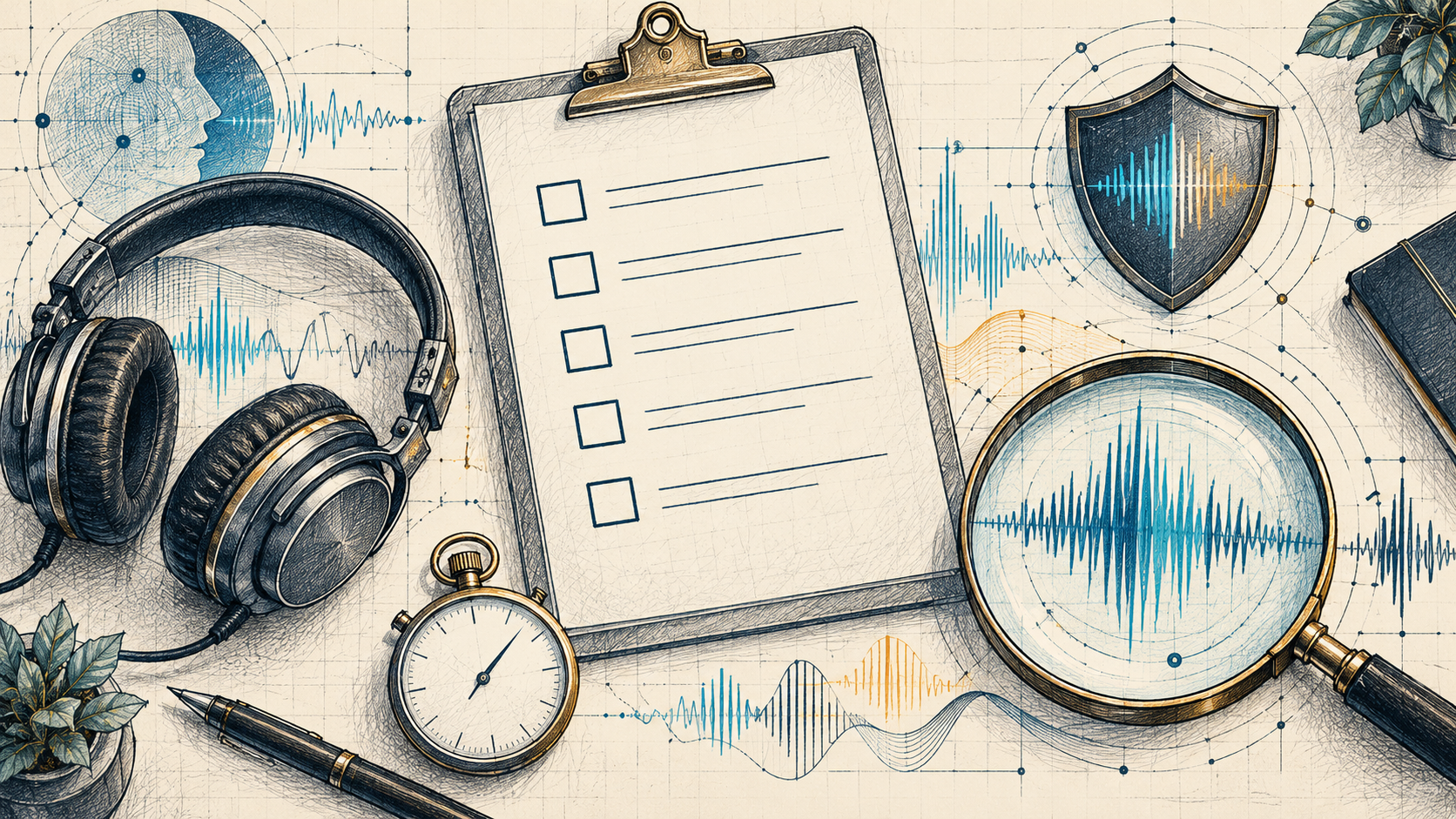
Evaluate conversation outcomes alongside audio quality.
Start with a small, repeatable test set and expand it when failures reveal missing coverage. Include quiet speech, background noise, unfamiliar names, self-corrections, meaningful pauses, and deliberate interruptions. Use recordings only with appropriate permission.
| Dimension | What to record |
|---|---|
| Response timing | Time from the intended handoff to the first useful audible response; note median and slow cases. |
| Interruption recovery | Whether playback stops, the correction is retained, and the answer resumes appropriately. |
| Meaning | Whether names, dates, constraints, and user corrections remain correct. |
| Delivery | Intelligibility, volume consistency, and whether emotion fits the situation. |
| Session reliability | Disconnects, forgotten context, recovery behavior, and repeatability. |
| User control | Whether mute, stop, correction, and human handoff work predictably. |
Do not invent numerical targets before understanding your workflow. A fast acknowledgment may matter for casual conversation; precise confirmation may matter more for a structured task. Set acceptance criteria in advance so a charming demo does not move the goalposts.
For example, build a 20-scenario pilot: five correction tasks, five interruption tasks, five pronunciation tasks, and five ordinary conversations. Run each scenario multiple times. Record the model version, device, input conditions, and a short failure note. This is a suggested pilot design, not a statistically complete benchmark or a reported Dessa result.
Evaluate bilingual behavior separately if your audience uses English and Chinese. A strong English example is not evidence of equivalent Mandarin performance, code-switching, or tone handling. Include native-speaking reviewers and the vocabulary your application actually uses.
Finally, ask testers what they believed the assistant understood. If the system sounded certain while missing an important constraint, that gap belongs in the evaluation report even when the audio itself was excellent.
Planning an integration with 01Router
For a prototype that needs available models, start with the 01Router model catalog. Confirm the exact model and provider rather than assuming all audio models offer interactive speech. At review time, the catalog we inspected did not list Dessa.
Next, use the 01Router API documentation to verify the selected model's request format and response behavior. A completed audio file and a bidirectional live conversation require different application handling; a unified key does not make their capabilities interchangeable.
Use the 01Router playground for a small capability check where the chosen model is supported. Then review 01Router pricing alongside the model's actual billing details. Include retries and unusable outputs when estimating cost per successful task.
Keep your first integration narrow: capture input, call a documented capability, present the result, and handle failure visibly. Add conversational complexity only after confirming that the transport and model support it. This preserves a useful prototype while Dessa's public access details develop.
Frequently asked questions
Is Dessa a text-to-speech generator?
The current model is presented as conversational speech-to-speech. If your task is simply narrating a fixed script, evaluate a documented text-to-speech capability against that requirement. Do not assume the same controls or API apply to both tasks.
Can I download Dessa or call a Dessa API now?
Use the dated access snapshot in this article and recheck the official page before implementation. We did not verify a public download or API contract during this review. Avoid unofficial commands that claim to install an unverified release.
Is Dessa open source or free?
We did not verify a published license or pricing schedule. Local execution, free access, open weights, and open-source software are separate properties. Each needs its own supporting documentation.
Does Dessa understand emotion?
Separate expressive behavior from reliable interpretation. For your use case, test whether the system responds appropriately to tone without making unsupported assumptions about the person speaking. A persuasive voice is not evidence of human feelings.
Should I replace an existing voice assistant with it?
Only after access, operating requirements, and task-level results meet your needs. For now, a comparison plan and a replaceable prototype are more useful than a production commitment based on selected examples.
Sources and verification notes
- Block: Dessa — primary source for the current model description, hardware claims, and access snapshot.
- Dessa: original RealTalk announcement — primary source for the 2019 text-to-speech project.
- Moshi: a speech-text foundation model for real-time dialogue — research context for full-duplex spoken interaction; not evidence about Dessa's implementation.
- NVIDIA: GB200 NVL72 — clarification of the rack-scale hardware configuration.
Reviewed October 26, 2026. The evaluation framework and deployment questions are editorial analysis, not vendor benchmarks. Update the access section when official downloads, licensing, API documentation, or reproducible performance results become available.
Start creating audio with 01Router
While Dessa has not yet opened general public access as of this article's verification date, you can start building audio features with Suno and ElevenLabs Eleven through 01Router:
- Suno: Generate songs with vocals or instrumental music from a description or your own lyrics—useful for soundtracks, jingles, and creative audio projects.
- ElevenLabs Eleven: Turn written scripts into natural-sounding speech for narration, voiceovers, and the spoken output of an assistant.
These models cover music generation and speech synthesis. Building a live conversational assistant also requires speech input, dialogue logic, and turn management; the models alone do not reproduce Dessa's full-duplex speech-to-speech behavior.
Visit the 01Router model gateway to explore Suno and ElevenLabs Eleven, compare available providers and prices, and choose an audio model for your project.